
About the project
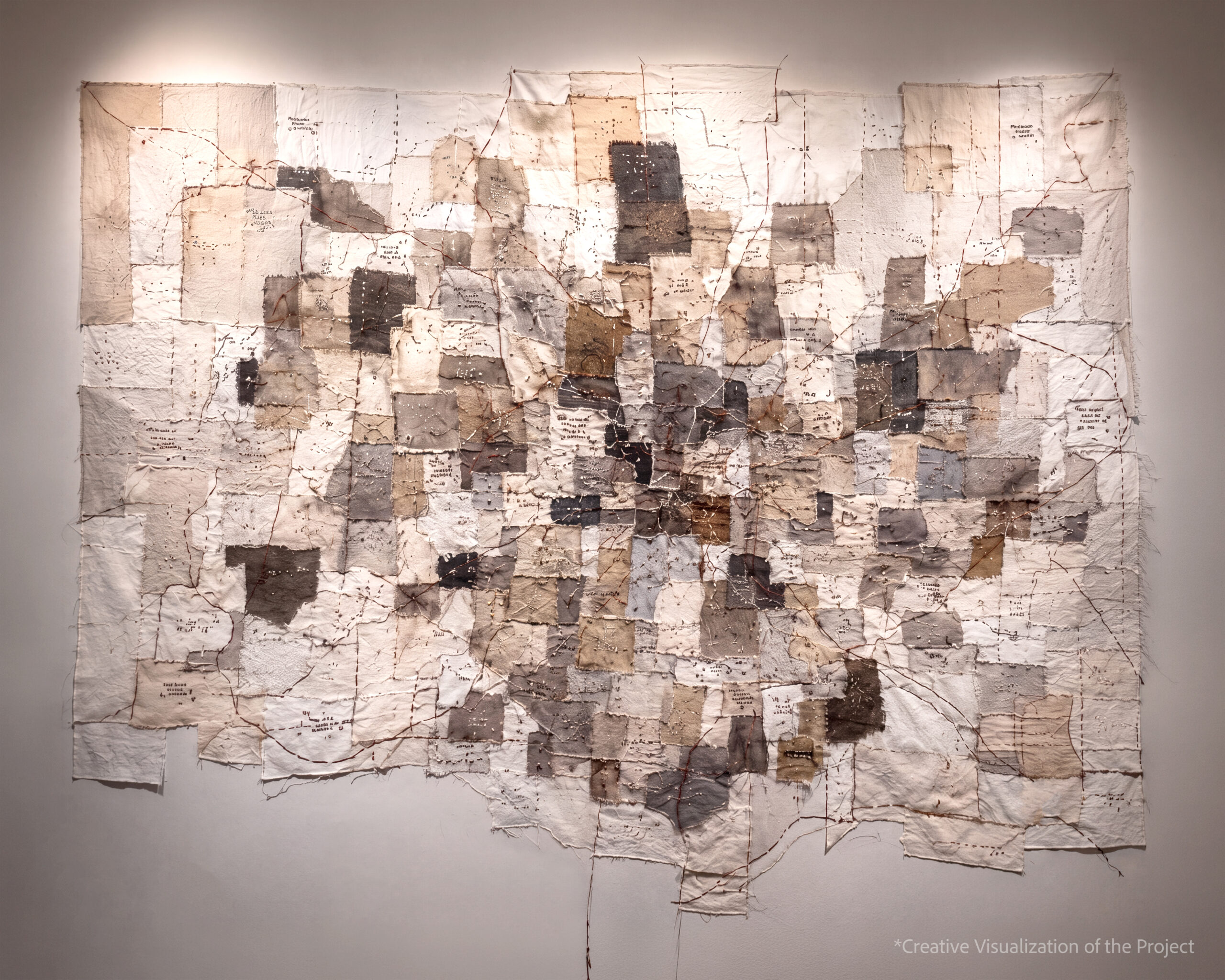
The Air We Remember is a participatory textile project that explores how air pollution is experienced, remembered, and lived beyond what environmental data can measure. While air quality is typically communicated through AQI readings and pollution indices, these metrics often fail to capture the emotional, social, and embodied realities of living in a polluted city. Through a citizen-generated textile archive, the project seeks to make these invisible experiences tangible.
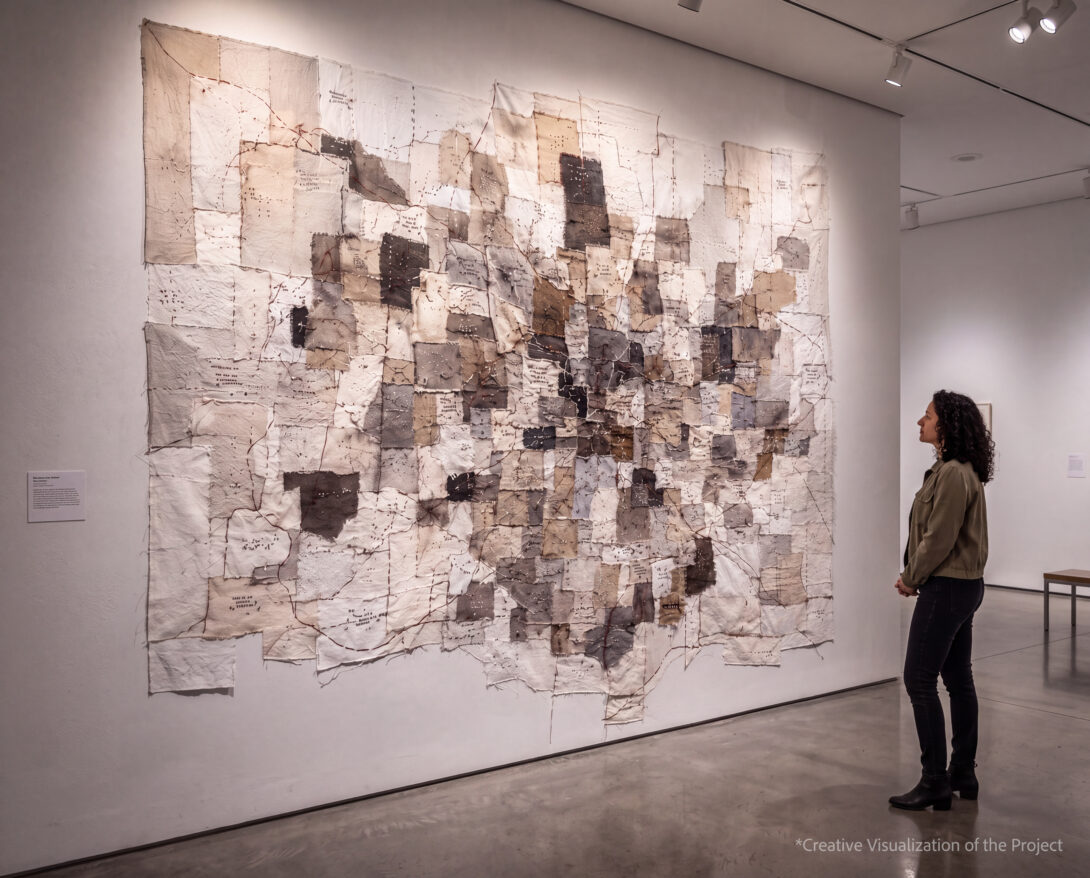
Set in Bengaluru, a city once known as India’s “Garden City,” the work reflects on the growing disconnect between memories of a greener past and the environmental conditions of the present. Using handwoven white cotton; a material deeply associated with cleanliness, care, and everyday life in India; the project transforms the fabric into a witness to the atmosphere, allowing it to record the city’s changing air. Individual textiles and personal testimonies come together to form a collective portrait of Bengaluru, revealing pollution not simply as an environmental issue, but as a shared human experience inscribed onto cloth.
About the project’s approach
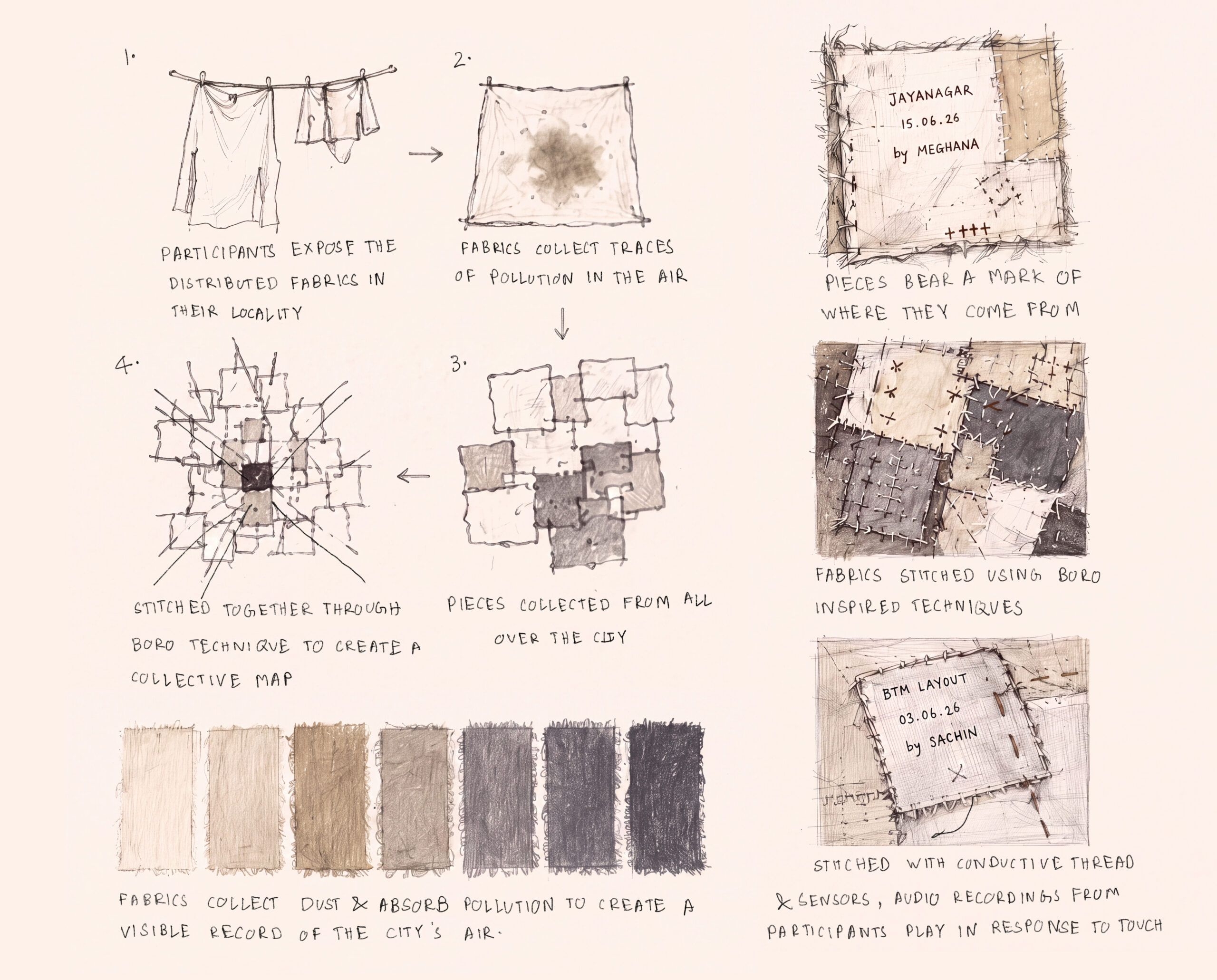
The project combines citizen participation, material observation, and storytelling. Participants across Bengaluru will each receive a piece of white starched handwoven cotton cloth and be invited to suspend it outdoors for thirty days. During this period, the textile will function as a passive recording surface, gradually accumulating dust and airborne particulates from its surroundings.
Alongside the textile, participants will contribute a short audio reflection describing a personal experience, observation, or memory related to air quality and environmental change in the city. These testimonies will provide a human narrative that exists alongside the material evidence captured by the cloth.
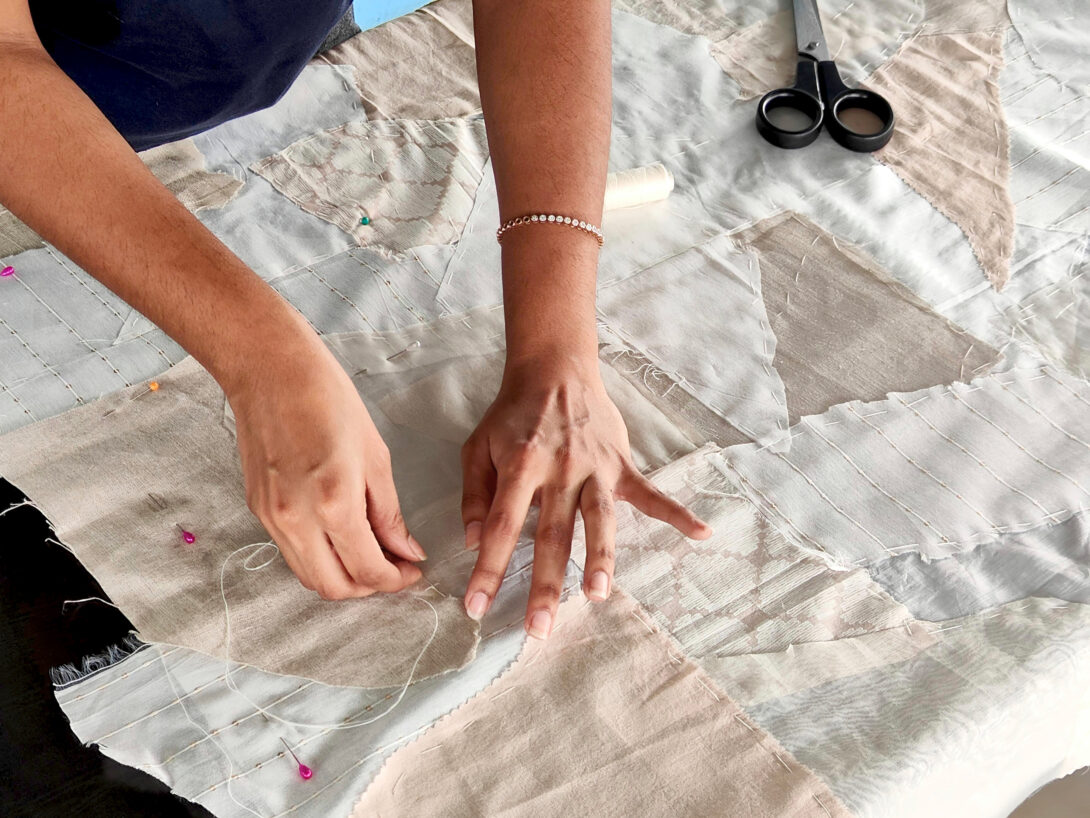
Once collected, the textiles will be catalogued according to their location and assembled into a large-scale patchwork installation. Interactive elements integrated into the textile will allow visitors to activate participant recordings through touch, connecting each material sample with an individual voice and experience.
The project adopts a citizen-science-inspired approach to environmental observation while prioritising personal narratives and material evidence over scientific measurement.
About the talent
Working across textiles, hand embroidery, cyanotype, biomaterials, and other experimental material processes, her practice combines research, making, and material exploration to examine how objects record traces of time, use, and human intervention. She is particularly interested in processes of repair, transformation, and the dialogue between inherited craft knowledge and contemporary material experimentation.
Through her work, Shalini hopes to develop new textile and material practices that honour the labour of making while allowing materials to retain their histories and evolve into new forms, creating space for overlooked narratives to emerge.