
About the project
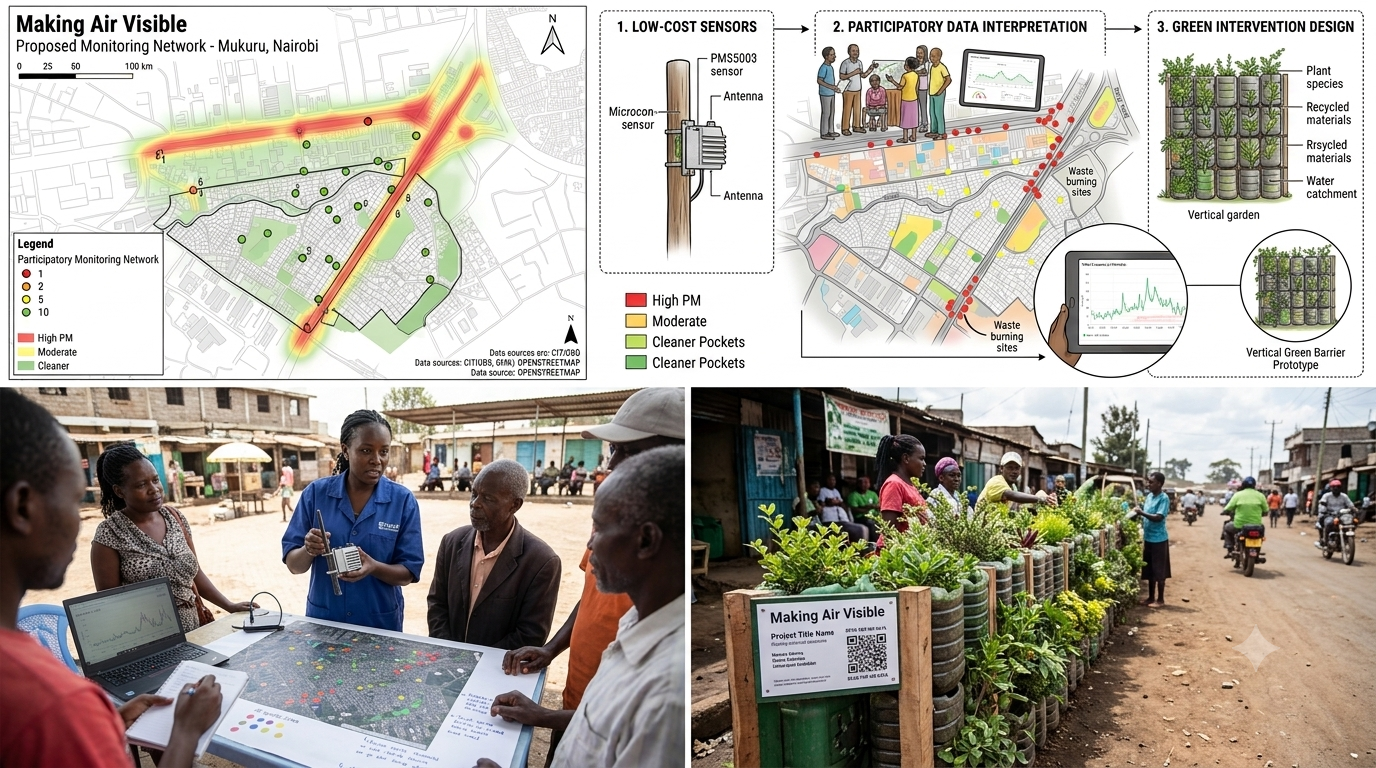
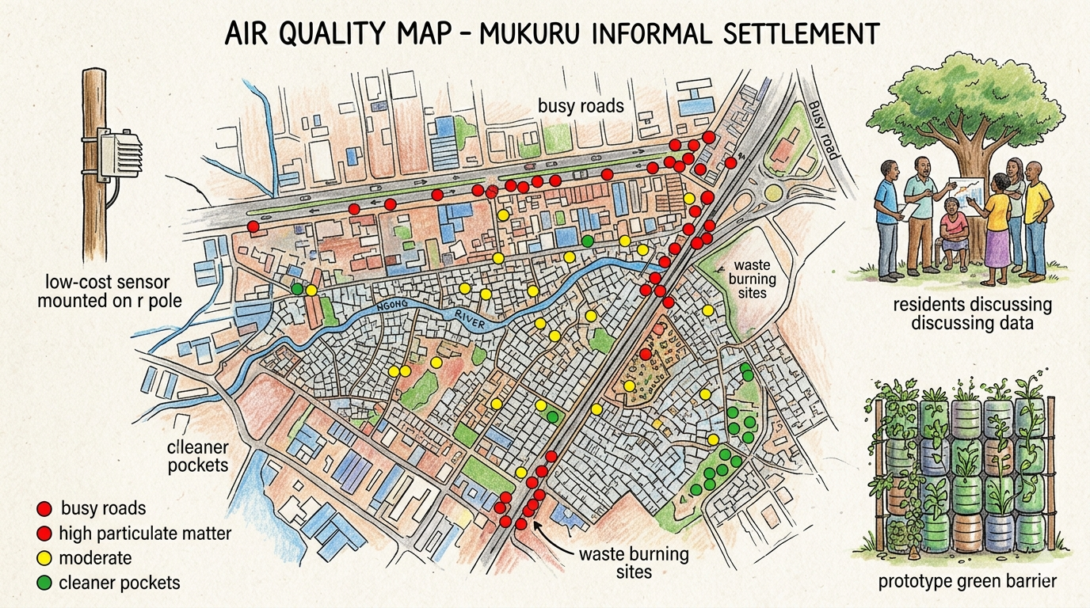
Air pollution in Nairobi’s informal settlements is a severe but poorly documented health crisis. Residents experience respiratory illnesses from dust, smoke, and waste burning, yet there is little community-owned data to support advocacy or action. “Making Air Visible” is a concept proposal for a community-led intervention that combines low-cost air quality monitoring with participatory design and green infrastructure prototyping. Working with youth groups and community-based organisations in Mukuru, Nairobi, the project will co-design and deploy simple PM sensors, collect and visualise data through participatory mapping workshops, and prototype green barriers in public spaces. The intervention treats air quality as a social and political issue, equipping communities with tools, data, and design agency to demand cleaner air.
About the project’s approach
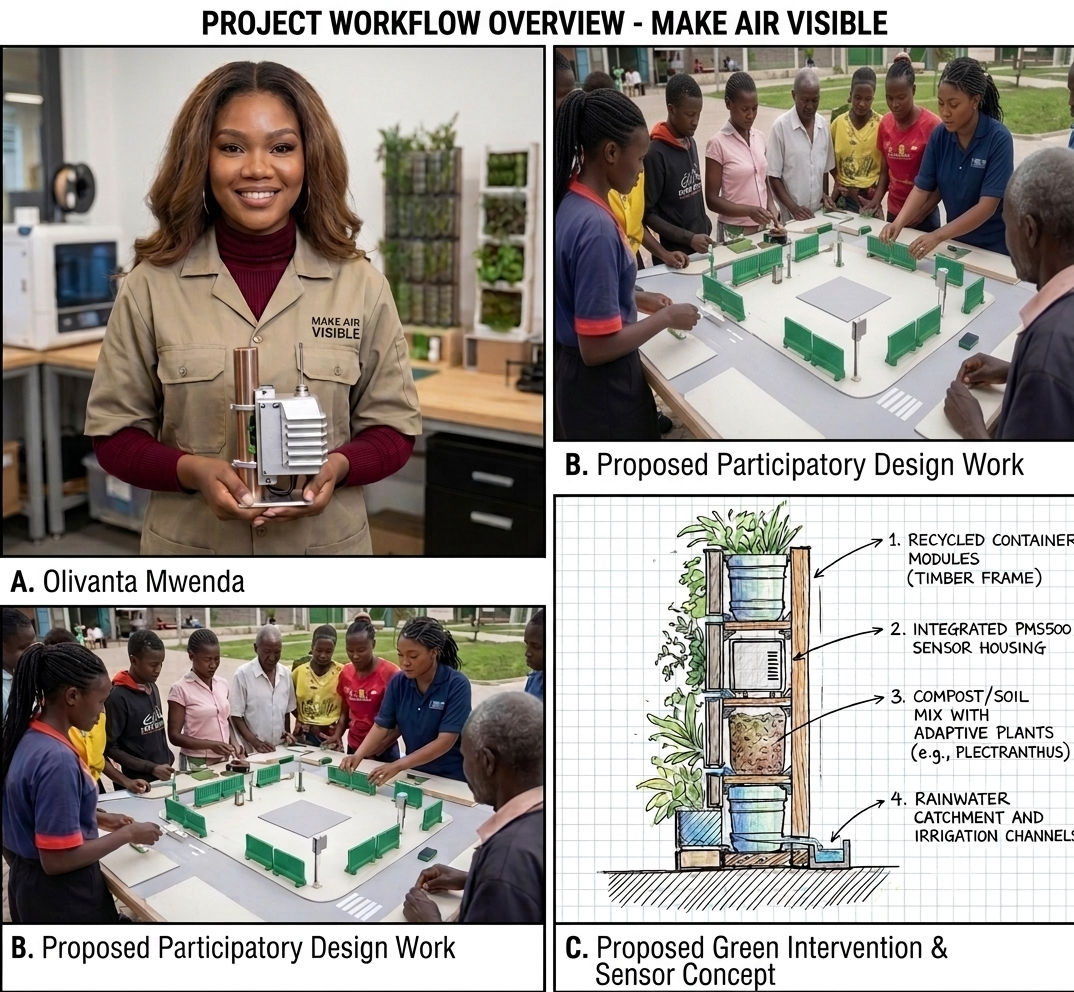
The project uses a participatory action research approach, structured in four phases: (1) co-design and capacity building, training community members as “citizen sensors”; (2) participatory data collection and mapping, combining sensor readings with local knowledge; (3) co-design and prototyping of green interventions, building low-cost green barriers with recycled materials; and (4) sharing and documentation, exhibiting findings and processes with the community. The approach is open, collaborative, and regenerative: it centres community knowledge, uses open-source hardware and software, and creates green infrastructure that improves air quality while beautifying public spaces. By empowering residents to produce and interpret their own environmental data, the project strengthens local agency and fosters long-term community-led environmental stewardship
About the talent
She holds a Bachelor’s degree in Urban Design and Development from the Technical University of Kenya and a Postgraduate Certificate in Environmental Impact Assessment and Audit. She has worked on green building standards, community co-creation workshops, and climate-adaptive public space design. She works from Nairobi, where she continues to explore how participatory design can support climate resilience in urban Africa